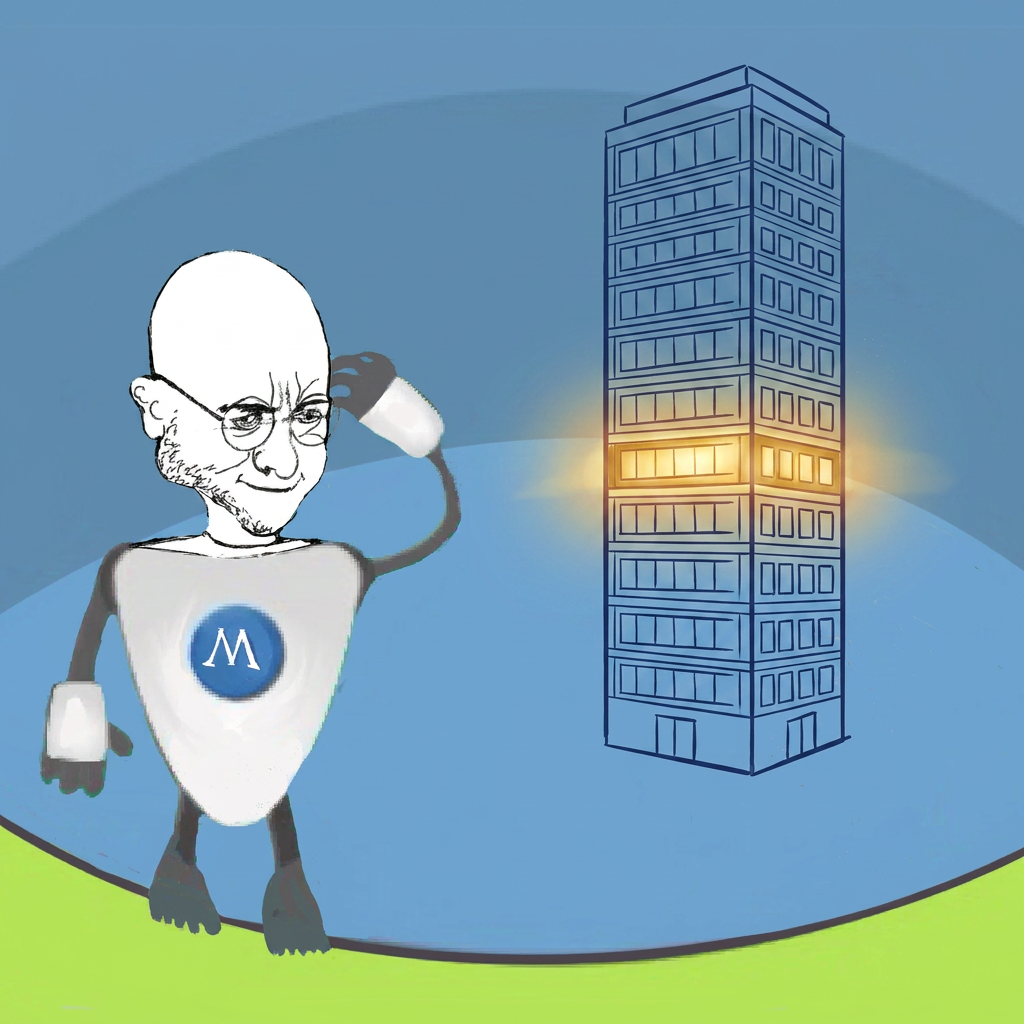
Refurbishing the Skyscraper: Modernizing Legacy Software Floor by Floor
The Operational Paradox
Imagine you are tasked with modernizing a fifty-story skyscraper in the center of a dense metropolis. The plumbing is corroded, the electrical wiring is outdated, and the floor plans no longer meet modern zoning codes.
However, there is a catch: the building is fully occupied. Families are living in the apartments, businesses are running on the commercial floors, and services must remain entirely uninterrupted. You cannot evict the occupants, and you cannot demolish the building to start from scratch. A total shutdown is financially and operationally impossible.
In software engineering, we face this paradox constantly. We inherit sprawling, complex legacy monoliths that are fragile, difficult to maintain, and hard to understand. They are also the core engines generating live revenue.
The temptation to declare bankruptcy and propose a “complete rewrite from scratch” is incredibly strong. It is also one of the most common ways to derail an engineering team. Rewrites from scratch fail because they underestimate the massive accumulation of hidden requirements and edge cases embedded in the legacy system. While you spend two years rebuilding the past, the world moves on, and your target is obsolete before it even ships.
Conversely, doing nothing is a recipe for slow structural rot.
The solution lies in adopting a disciplined, systematic architectural pattern: Refurbish one floor at a time. Keep the building operational. Prove the refurbished floor before removing anything old.
When applied to software engineering, this philosophy breaks down into a repeatable, step-by-step modernization pipeline.
1. Establish the Structural Survey
Before you swing a single sledgehammer on an active floor, you must understand the loads, the structural columns, and the utilities passing through the walls.
In software, this means capturing the existing state with absolute precision. You must map the target legacy component’s inputs, outputs, side effects, implicit dependencies, performance baselines, and known operational risks.
Do not rely solely on old documentation or what developers think the code does. Legacy systems are notoriously undocumented, and their true behavior is often defined by accidental bugs that downstream callers have adapted to over time.
Build a boundary harness. Instrument the existing code path to capture real-world traffic patterns, or construct a suite of characterization tests that assert how the current module behaves under varied inputs. Your goal is not to judge the old code, but to map its real footprint.
2. Choose One Bounded Floor
You do not attempt to modernize the entire skyscraper at once. You start with a single, bounded floor.
When selecting your target capability, find a slice of logic that is small enough to replace completely without requiring a wider redesign of the entire application.
If you choose a module that has tight, circular dependencies with twenty other subsystems, you have not chosen a single floor—you have chosen a central elevator shaft. If you pull on that thread, the entire structure will collapse in your hands.
Instead, look for a leaf node in your dependency graph or a clean vertical slice. It should have a well-defined public interface. By isolating your blast radius to a single bounded context, you ensure that if your refactoring runs into unexpected complexity, you can halt or revert the changes without affecting the rest of the application.
3. Build the Replacement Beside the Legacy
When refurbishing an active floor, you build the temporary structural supports and new partitions adjacent to the old ones.
In software, this means you write the new implementation as an entirely separate, side-by-side module. Do not mutate the old code merely to make the replacement easier.
Modifying the legacy code while trying to build its successor introduces parallel variables and pollutes your control baseline. It makes it incredibly difficult to isolate the root cause when tests fail.
Keep the legacy code pristine and untouched. Let it continue serving production traffic. Build your new class, service, or microservice in its own namespace, completely free from the technical debt and structural compromises of the past.
4. Reach Behavioural Parity
Before you move a family into a newly refurbished apartment, you test the fixtures, turn on the faucets, and verify that the electrical outlets are live.
For your new software component, this means reaching behavioral parity with the legacy code under realistic conditions. The new component must reproduce the required public behavior of the old component.
This is where BDD, high-fidelity mock environments, and realistic fixtures are essential. Run identical payloads through both the legacy and the new components. Assert that their return values, structured schemas, exception boundaries, and database writes are identical.
Your unit tests should verify individual functions, but your integration harness must prove that the composition behaves exactly like the original. Parity is reached when the new code can process any production payload with the exact same logical outcome as the legacy system.
5. Refurbish Internally
Once you have proven that the plumbing on the new floor is logically correct, you can spend time organizing the utility runs, tightening the joints, and insulating the lines.
In software, once you have established behavioral parity, you enter the most satisfying phase of the cycle: Refurbish internally.
Now that you have a comprehensive test suite locking down the public behavior, you can aggressively clean up the internal implementation. Separate responsibilities, eliminate redundant branching, tighten your typing signatures, and benchmark your loops.
Because you are working inside a secure sandbox protected by your parity tests, you can refactor with absolute confidence. This is where high-quality engineering actually happens—not during the initial scramble to get the logic working, but during the disciplined cleanup phase once correctness is guaranteed.
6. Certify the Floor
Before any floor in a building is reopened to the public, inspectors must sign off on its structural integrity and safety.
In software development, certification must be dual-pronged:
- Tests prove behaviour. They verify that the logic is correct and that no regressions have been introduced.
- Benchmarks prove structural improvement. They verify that the new implementation is faster, consumes less memory, leaks fewer connections, or utilizes threads more efficiently than the legacy code.
Neither of these can substitute for the other. A highly performant module that returns corrupt data is useless. A logically correct module that tanks your system’s response times is equally unacceptable. Only when a component has passed both behavioral and performance validation can it be certified as ready for occupancy.
7. Move the Occupants
With the floor certified, it is time to move the residents from their old, outdated apartments into the newly refurbished space.
In your software system, this means rerouting active callers and workflows from the legacy component to your certified replacement.
This transition should be executed with caution. Avoid a “big bang” switchover where 100% of live traffic is directed to the new code instantly at midnight. Instead, use patterns like feature flags, canary rollouts, or branch routing. Reroute 1% of callers, monitor your error logs and latency metrics, and then gradually scale the occupancy to 10%, 50%, and finally 100%.
Keep the legacy code active and standing in the background. If an unexpected edge case emerges under real production load, your routing layer should allow for an immediate, zero-downtime rollback to the legacy path while you investigate the issue.
8. Remove Only the Vacated Legacy Space
Once the residents are settled on the new floor, their old, dilapidated apartments are finally empty. Now—and only now—can you bring in the demolition crew.
In software, this means deleting the legacy code. But only delete legacy behavior when evidence proves that the replacement completely owns it.
If a function in the old module is still being called by a forgotten, once-a-month cron job on another floor, that space is not yet vacant. If you delete it prematurely, the system will crash when that cron job next fires.
Verify that your routing metrics show absolutely zero callers executing the legacy paths. Check your package imports, dependency trees, and system entrypoints. Once you have absolute, empirical evidence that the old code is completely uninhabited, delete it.
Dismantle the past with confidence, reclaiming that space and reducing your cognitive load.
9. Repeat Floor by Floor
With the first floor fully modernized and the old debris removed, you move your tools, blueprints, and teams up to the next level.
You repeat the cycle: structural survey, bounded isolation, parallel construction, parity verification, internal refactoring, certification, occupancy transition, and controlled cleanup.
By repeating this pattern floor by floor, you can gradually modernize an incredibly large, complex, and fragile monolith. You do not need to pause feature delivery, you do not need to take the system offline, and you do not need to risk the existential crisis of a two-year blind rewrite.
Eventually, the final legacy line of code is deleted. You look up, and realize you have completely rebuilt the skyscraper from the inside out—while keeping the lights on the entire time.