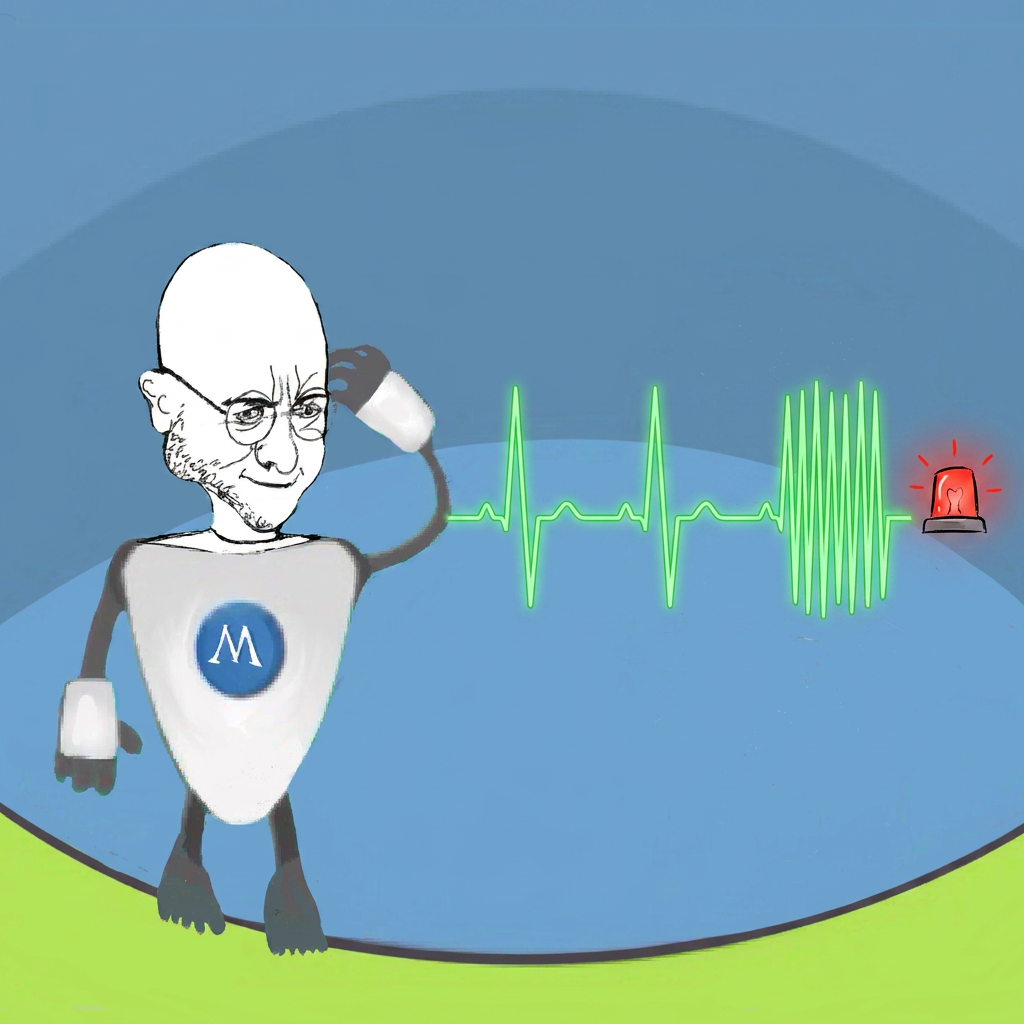
Time Between Bad Reviews: Listening to the Pulse of Operational Failure
The Lagging Illusion of the Aggregate Rating
Most consumer-facing organizations manage their operational health using trailing averages. They log into platforms like Trustpilot or Google Reviews, look at their aggregate score, and declare success: “We are a 4.6-star business. All is well.”
But trailing averages are a highly buffered, lagging illusion.
An aggregate rating is a massive accumulator. It acts like a low-pass filter, smoothing out sudden operational shocks. By the time your average rating drops visibly from 4.6 to 4.2, your delivery pipeline has been in a tailspin for weeks, your staff is burning out, and customers have already begun churn cascades.
Aggregate Rating (Lagging & Buffered):
[ 4.6 ] ─── [ 4.6 ] ─── [ 4.6 ] ─── [ 4.5 ] ─── [ 4.4 ] (Too late!)
To run a responsive operation, you cannot rely on cumulative scores. You need a leading metric that acts like an active radar.
You need to measure Time Between Bad Reviews (TBBR).
TBBR: The Operational Heart Rate Monitor
Instead of measuring what your score is, TBBR measures the temporal density of your negative feedback. It treats the arrival of bad reviews as an active pulse—much like an electrocardiogram (ECG) monitoring a heart rate.
In a healthy, stable operation, negative feedback is sparse and spaced out:
Bad Review          Bad Review            Bad Review
    ●───────────────────●───────────────────────●
          7 Days               10 Days

Healthy, stable spacing (High TBBR)
But when a system, a software release, a third-party supplier, or a key delivery process breaks, the time between bad reviews compresses rapidly:
Bad Review     Bad Review   Bad Review  Bad Review
    ●──────────────●────────────●────●
         3 Days       1 Day     6 Hours

TBBR Compression — Immediate Operational Alert!
A sudden contraction in TBBR—from seven days down to three days, then to one day, then to six hours—is a real-time signal of systemic failure.
The aggregate rating will not reflect this shock for weeks. But the TBBR compression tells you immediately that something in your system has broken. It doesn’t tell you the exact bug, but it screams: “The system is in distress. Investigate right now.”
The Scale of Contrast: Humans vs. Opaque Organisms
When you analyze reviews under a qualitative lens, a fascinating structural contrast emerges between five-star and one-star feedback.
Five-Star Reviews are Human-Centered and Specific
If you scan your positive reviews, you will find they rarely praise “the efficiency of an AI-native home-management platform.” Instead, they name specific human beings:
“Katrina is the absolute best. She was personable, helpful, and got us a much better energy deal.”
“Donna helped me set up all the bills. She made everything incredibly easy to understand.”
These customers are celebrating a named human who stepped forward, absorbed system complexity on their behalf, and built personal rapport.
This suggests a powerful operational metric: the Named Human Attribution Rate.
$$\text{Named Human Attribution Rate} = \frac{\text{Positive reviews naming a staff member}}{\text{Total positive reviews}}$$
If 65% of your detailed five-star reviews attribute success to a named human, it proves that visible, personal human ownership is your primary mechanism of customer delight.
One-Star Reviews are Anonymous and Structural
Conversely, when customers write one-star reviews, they rarely target individual names. Instead, they describe your company as an opaque, faceless organism:
“Avoid them!! They told us viewings after 5 p.m. wouldn’t be a problem, but then they made us sell the house ourselves.”
The customer uses “they” or “them” because they feel abandoned by the system. Underneath the exclamation marks and high emotional volume, there is almost always a specific structural breakdown: a customer constraint was collected during sales but was not honored during delivery.
The Diagnostics of Frustration
An angry review is noisy, but the anger is merely the output. To make feedback actionable, an operation must strip away the emotional amplification without discarding the intensity—which indicates how severely the customer felt the broken expectation.
A system-thinking review parser should translate raw emotional feedback into an operational bug report:
| Raw Review Input | Operational Translation |
|---|---|
| Customer Emotion | Very High Frustration / Feeling Abandoned |
| Expectation Established | Customer was assured viewings would be fully managed |
| Observed Outcome | Handover failed; customer forced to conduct viewings |
| Failure Class | Sales-to-Delivery Handover Breakdown |
| Actionability | High (Requires process audit on viewing scheduling) |
By treating feedback as diagnostic evidence, you can pinpoint exactly which handovers, databases, or partner integrations are failing.
The Automation Paradox: Supporting Katrina, Not Automating Her
In the age of AI, the corporate instinct is to look at human-centric success and draw the wrong conclusion:
“Our customers love Katrina, so let’s replace Katrina with a generative AI agent.”
This is a critical failure of systems thinking.
If you replace Katrina with an automated bot, you do not scale Katrina’s value. You destroy the very empathy, rapport, and personal ownership that the customer praised. The customer will immediately sense that they are interacting with an anonymous “they” and will treat the next minor hiccup as a systemic failure.
The mature automation strategy is not to automate Katrina. It is to automate the administrative toil surrounding Katrina.
By using AI to automate her scheduling, her data entry, her ticket summaries, and her partner lookups, you free her cognitive space. You give Katrina the time to do what she does best: listen to customers, absorb their operational complexity, and build the human trust that no algorithm can synthesize.